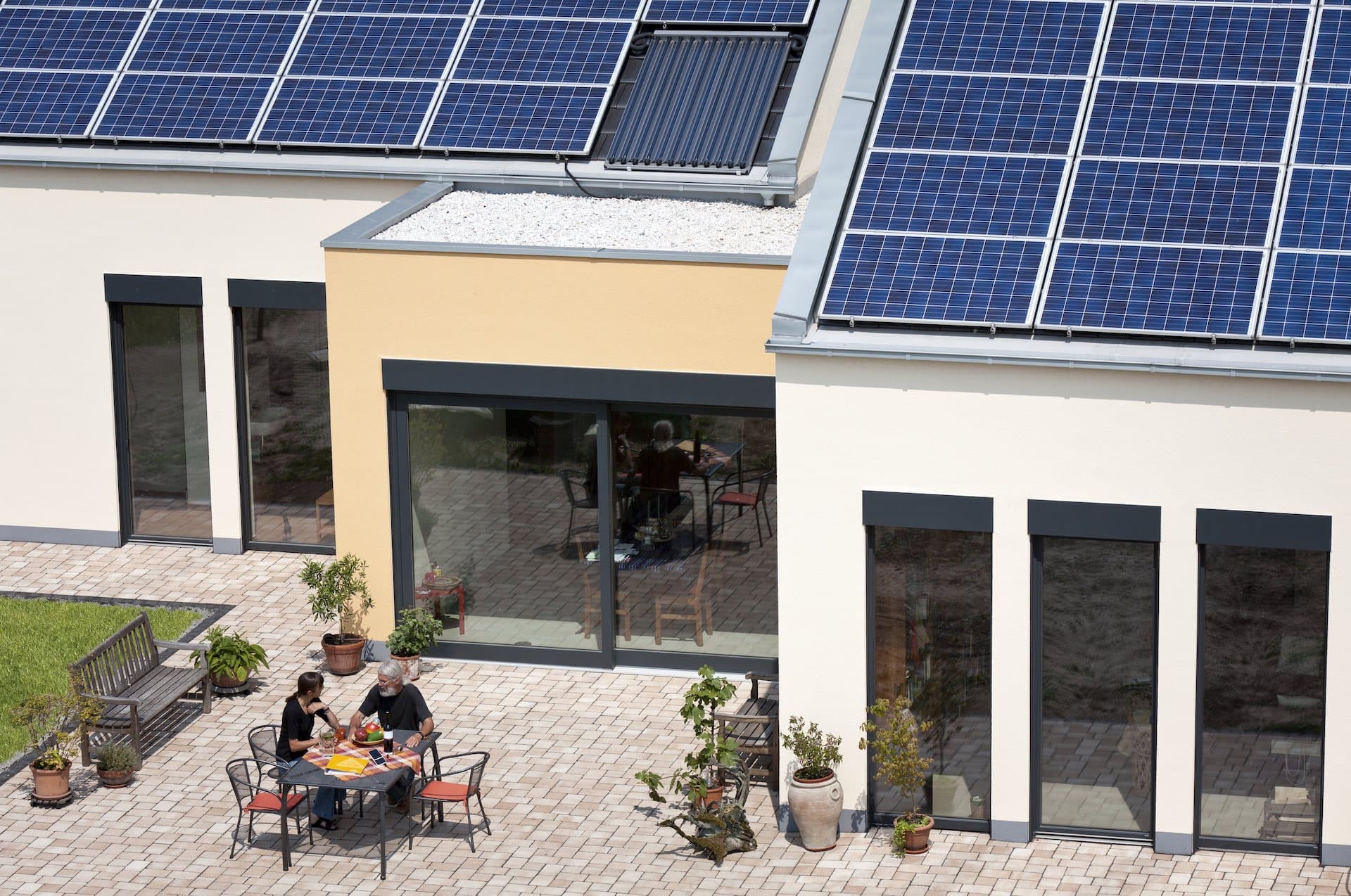


Western Australian households can stack three layers of solar and battery support in 2026. On a typical solar-plus-battery installation the short version of this guide put the combined value at $7,000–$12,000. This page is the same stack, with the eligibility and the 1 May 2026 battery-program change written out so the dollar figures have a source.
None of these amounts is a cheque we invent at quote time. Solar certificates are taken off the invoice. The federal battery discount is taken off the invoice. The WA battery amount is a state rebate off the installed battery, with an optional loan beside it. Feed-in payments from DEBS are not part of this stack; they are a few cents per kilowatt-hour on exports, covered in the Synergy rates guide.
1. Federal STC discount on solar
Small-scale Technology Certificates reduce the upfront cost of solar systems under 100 kW. They are certificates, not a rebate you apply for afterwards. Perth sits in STC Zone 3, which is a postcode zone used to calculate the certificate value, not a weather region or a council boundary. In 2026 that discount is worth roughly $1,800–$2,400 on a 6.6 kW system. It is applied at the point of sale.
Zone 3 is why a Wheatbelt or Bunbury roof is calculated on the same basis as a Perth roof. The installer creates the certificates and the price you are quoted should already be net of them. If a quote shows a large "rebate" you have to claim yourself, ask for the certificate value to be itemised instead.
On our package list the result is a 6.6 kW system, 14 × 475W, from $4,290 fully installed, and a 10 kW system, 23 × 440W, from $6,990. Those are after the STC discount. A 6.6 kW quote with a premium panel and inverter combination is listed up to around $7,500, so the from-price is the volume build, not every brand.
2. Federal Cheaper Home Batteries discount
The Cheaper Home Batteries program has been running since July 2025. It discounts installed battery costs by around 30% for eligible systems between 5 kWh and 50 kWh. A worked example already on this guide: a Tesla Powerwall 3 that would otherwise cost about $17,000 installed comes down to roughly $12,000. The current Powerwall 3 listing is from $11,990 installed after that federal discount.
The program article also records a funding increase from the original $2.3 billion estimate to an estimated $7.2 billion, aimed at a much larger number of installations. For common system sizes this guide keeps the around-30% description rather than treating any single rate as a price we set. The quote is where the current factor is applied.
On 13 December 2025 the government announced two changes that take effect for the structure of support. After 1 May 2026 the STC factor is tiered by usable capacity: 100% of the factor for the first 0–14 kWh, 60% for 14–28 kWh, and 15% for 28–50 kWh. The stated aim is to keep an overall discount of around 30% for common sizes while the budget covers more homes. Batteries and installers still have to meet the accreditation and safety requirements in the Renewable Energy (Electricity) Regulations 2001. If you are quoting a battery larger than 14 kWh after that date, do not assume the first-14 kWh rate applies to the whole stack.
The write-up of that announcement is Cheaper Home Batteries program changes.
3. WA Residential Battery Scheme
The state scheme is no longer a proposal. It is a WA Government rebate off the installed battery cost and, for eligible households, an optional no-interest loan administered by Plenti. The amounts published in the WA battery article are:
- Synergy customers: up to $1,300 on a 10 kWh battery.
- Horizon Power customers: up to $3,800 on a 10 kWh battery.
- No-interest loan: $2,001 to $10,000, over 3 to 10 years, at 0%. Plenti assesses credit and handles repayments.
That "up to $10,000" loan is the figure the short version of this guide used. The floor of $2,001 and the 3-to-10-year term are the rest of the same offer. Household gross annual income has to be under $210,000 for the loan, and you must be a permanent resident, 18 or older, and a Synergy or Horizon Power customer. Connection type still matters because the rebate amount itself depends on whether you are with Synergy or Horizon.
Participation in a virtual power plant is required for the WA rebate and for the loan. It is not optional window dressing. What that means for Synergy Battery Rewards, Plico and Amber is in the VPP guide. Federal incentives are separate and have their own timing.
The full eligibility notes are in the WA battery scheme article.
How the three layers show up on a quote
| System | Before incentives | After incentives |
|---|---|---|
| 6.6 kW solar (14 × 475W) | STC discount applied at sale | from $4,290 |
| 10 kW solar + Powerwall 3 | $26,980 | $17,990 |
| SigenStor, about 8 kWh, battery only | $10,700 | $7,490 |
All Perth Solar Warehouse package prices are displayed after incentives. The price on the page is the price the listing is asking you to compare, not a price we then surprise you by discounting again in the showroom.
A battery-only SigenStor at $7,490 after incentives is the about-8 kWh module (8.06 kWh on the current product listing). It is not a 13.5 kWh Powerwall. The Powerwall 3 row in the table is the solar-plus-battery stack at $17,990 after incentives, which is a different purchase from the Powerwall-only from-price of $11,990.
What does not belong in this stack
- DEBS pays about 10c/kWh for exports from 3 pm to 9 pm and about 2c/kWh at other times. It is ongoing bill income, not an upfront discount.
- Synergy concessions (pensioner and senior bill credits and similar) sit on the electricity account. They are not cancelled by installing solar. They are a different list from the three layers above.
- Retailer finance is separate again. The business offers $0 deposit and 36 months interest-free through Brighte, Plenti and Green Loan. That is a payment plan, not the WA battery loan, and a household should not assume both can be used on the same dollar without the lender saying so.
A sensible order of decisions
Start with the solar size you will actually use in the daytime, because the STC discount is a discount on a system, not a reason to buy a bigger one than the roof and the switchboard support. Then decide whether a battery is for overnight use, backup, or both. The federal battery discount and the WA rebate only help if the battery is eligible and, for the WA amount, if you will join a VPP.
If the battery is larger than 14 kWh and the install is after 1 May 2026, ask for the tiered federal factor to be shown in bands rather than as one flat percentage. If you want the state loan, check the $210,000 household income test and the $2,001–$10,000 band before you rely on it.
You can sketch the stack on the rebate calculator and the payback on the solar ROI calculator. Neither replaces the quote, because export limits, switchboard works and the VPP you join all move the final number.
Published 10 February 2026 · Last reviewed 20 May 2026 · CEC Accredited Installers · Licensed Electrical Contractors (WA)